
This blog is for business buyers looking to learn more on the how and why to buy a business in Houston…and also relevant for business buyers looking in Stafford, Bellaire, or Channview’s industrial zone.
Key Highlights
- Following a step-by-step process simplifies the journey from searching for a business to closing the deal.
- The Houston market is a thriving hub for business opportunities, from manufacturing, distribution, to healthcare, IT, and advanced technology
- Conducting thorough due diligence is essential to understand a company’s true financial health and future potential.
- A professional business valuation helps you determine a fair purchase price and strengthens your negotiating position.
- Building a team of experts, including a broker, CPA, and attorney, is critical for a successful acquisition.
- Financing is accessible through options like SBA loans and seller financing, making business ownership achievable.
Are you ready to take the exciting step into business ownership?
The Houston market offers a dynamic and growing environment for entrepreneurs like you. Buying an existing Houston business can be a fast track to success, providing you with an established customer base and immediate cash flow. This guide provides expert tips to help you navigate the process, from understanding the local landscape to closing the deal with confidence. Let’s explore how you can find and acquire the right company for your goals.
Understanding the Houston Business Market
Houston stands out as one of the nation’s largest and fastest-growing metropolitan areas, creating a wealth of business opportunities. With a diverse economy and a pro-business environment in Texas, the local market is ripe for new ownership. The region’s continuous job growth fuels consumer demand, supporting a wide range of industries.
For anyone considering business ownership, understanding these dynamics is the first step. The sheer size and diversity of the Houston market mean there are options for nearly every interest and budget. Exploring the key traits of local businesses and popular industries will help you identify the perfect fit.
Key Traits of Small and Mid-Size Businesses in Houston Texas

When you evaluate a small business in Houston, look beyond the asking price. A healthy company will have clear and consistent revenue streams. You should be able to review several years of financial statements to identify trends in sales, profitability, and cash flow. Don’t hesitate to ask questions about anything that seems unclear.
An established brand with a loyal customer base is another powerful asset. This indicates that the business has built a solid reputation in its community. A strong brand can give you a significant advantage from day one, saving you the time and expense of building a customer following from scratch.
Ultimately, you are looking for a business with a proven track record and potential for future growth. Does the business model fit the local demographics? Can you see ways to add value and expand its operations? Answering these questions will help you determine if the opportunity aligns with your long-term goals.
Popular Industries with Businesses for Sale
The Houston market features a diverse range of industries with ample business opportunities. Sectors like professional services, healthcare, and technology are consistently strong due to the city’s large corporate presence and world-class medical center. Additionally, consumer-facing industries thrive thanks to a growing population.
You will find many businesses for sale in sectors that cater directly to residents and other companies. These include everything from restaurants and retail stores to construction contractors and B2B service providers. This diversity allows you to find an opportunity that matches your skills and interests in the local market.
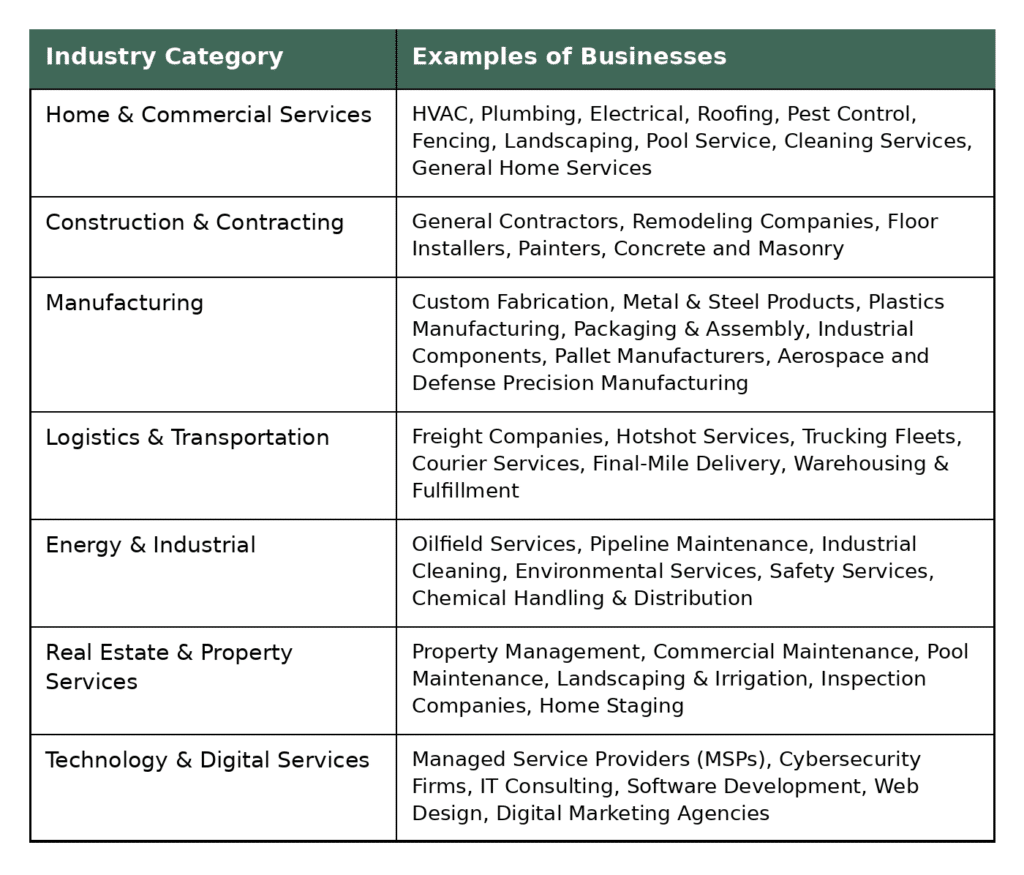
Here is a look at some of the popular industries where you can find businesses for sale:
What You Need Before Buying a Business

Before you start your search, it’s crucial to get organized. Preparation involves understanding your financial capacity and knowing what to look for in a business. This is the stage where you begin to think about due diligence, the process of thoroughly investigating a business before committing to a purchase agreement.
Having key documents in order and seeking professional guidance early on will save you time and prevent costly mistakes. A proper business valuation and a close review of financial records are non-negotiable steps. The sections below will guide you on securing financing and assembling the right team to help you succeed.
Essential Resources and Requirements for Financing a Business Acquisition and Valuation
Multiple financing options exist for aspiring business buyers in Houston. Exploring SBA loans is crucial, as they offer favorable terms for small to mid-sized acquisitions. A thorough examination of financial statements and cash flow will help determine the purchase price and valuation of the existing business. Additionally, seller financing can ease your cash flow while securing a smooth transaction. Engaging professional services for a comprehensive due diligence process ensures you understand all revenue streams and risks before committing to a purchase agreement.
Building Your Professional TX Support Team (Brokers, CPAs, Attorneys)
You don’t have to navigate the acquisition process alone. Assembling a team of trusted advisors is one of the smartest investments you can make. These professionals provide the guidance needed to avoid common pitfalls and ensure you make a sound decision. Your team will help you evaluate opportunities, structure the deal, and protect your interests.
A business broker can help you find listings that match your criteria, while a CPA is essential for analyzing financial records and performing a business valuation. An attorney specialized in M&A will review contracts, leases, and the final purchase agreement to ensure there are no hidden liabilities
Your essential team should include:
- A Business Broker: To find opportunities and facilitate negotiations.
- A Certified Public Accountant (CPA): For financial due diligence and valuation.
- An Attorney: To handle legal review and contract drafting.
- A Lender: To secure financing for the acquisition.
Beginner’s Guide: How to Buy a Business in Houston

For first-time buyers, the path to business ownership can seem complex. However, buying an existing business in Houston is a manageable process when you follow a structured approach. Breaking the journey down into clear, actionable steps helps you stay organized and confident from start to finish.
This beginner’s guide is designed to give you a roadmap. By leveraging professional services and focusing on one stage at a time, you can effectively search for, evaluate, and purchase a small business. The following sections will detail how to find available businesses and what to look for in a quality opportunity.
Finding Businesses for Sale in Houston
Your search for the right Houston business begins with knowing where to look. While some opportunities are publicly listed, many of the best deals are found through networking. Building connections with professionals in the transaction space can give you access to exclusive listings before they hit the open market.
Online marketplaces are another excellent resource. Websites dedicated to business sales allow you to filter by industry, location, and price, making it easy to find opportunities that fit your criteria. Setting up alerts on these platforms ensures you are among the first to know when a new business is listed.
Here are some effective ways to find businesses for sale:
- Online Marketplaces: Websites like BizBuySell and Axial list hundreds of local businesses.
- Business Brokers: These professionals have access to a wide network of sellers.
- Professional Networking: Connect with CPAs, attorneys, and bankers who are aware of owners looking to sell.
- Industry Associations: Events and publications can reveal potential opportunities.
What to Look for When Evaluating a Business Opportunity
Once you’ve identified a potential business, the evaluation process begins. Your goal is to verify the seller’s claims and assess the company’s true health. This starts with a deep dive into the financial records. A thorough due diligence process is your best defense against making a poor investment.
Look for consistent cash flow, which is the lifeblood of any business. Is the company profitable, and if not, is there a clear path to profitability? Beyond the numbers, consider the business’s potential for future growth. Are there opportunities to expand services, reach new customers, or improve efficiency? A professional business valuation will help you synthesize this information into a fair offer price.
Key areas to investigate include:
- Financial Health: Review at least three years of tax returns and financial statements.
- Customer Base: Assess customer concentration and loyalty.
- Operational Strength: Examine processes, systems, and employee stability.
- Market Position: Understand its reputation and competitive landscape.
Step-by-Step Process to Buying a Business

Following a structured, step-by-step process is the key to a smooth transaction. This framework ensures you cover all your bases, from the initial business valuation to negotiating the final purchase agreement. A methodical approach prevents you from getting overwhelmed and helps you make informed, logical decisions.
Each step builds on the last, starting with defining what you’re looking for and moving through due diligence, financing, and making an offer. By working with the current owner and your team of advisors, you can navigate this path confidently. Let’s break down the essential steps.
Step 1: Define Your Acquisition Criteria
The first step in your journey is to know what you’re looking for. Defining your acquisition criteria will focus your search and help you quickly identify the perfect opportunity. Start by considering your personal goals, financial capacity, and professional skills. What kind of small business do you see yourself running?
Create a list of key parameters to help narrow your search. This should include your desired industry, the size of the business (based on revenue or employee count), and your preferred geographical area within the Greater Houston area—whether you are targeting the northwest corridor near The Woodlands, Spring, Tomball, or Cypress, the west side around Katy, or the south and southwest markets such as Sugar Land, Pearland, or Missouri City. You may also prefer the east and southeast business communities in Baytown, Pasadena, Deer Park, or Channel view, or the growing north and northeast areas including Humble, Atascocita, Kingwood, and Conroe. From there, consider your target price range and the level of involvement you want to have—whether you plan to operate the business day-to-day or prefer a company with management already in place.
Having clear criteria prevents you from wasting time on unsuitable business opportunities. It allows you to communicate your needs effectively to business brokers and other advisors, who can then bring you qualified leads. This focused approach makes the search process far more efficient and successful.
Step 2: Conduct Due Diligence and Assess Acquisition / Merger Value
After you find a business that meets your criteria, it’s time for due diligence. This is a critical investigation into every aspect of the company to verify the seller’s claims. Your CPA and attorney will be your most valuable partners during this phase. They will help you dissect the financial statements, contracts, leases, and any other relevant documents.
A key part of this step is performing a business valuation. By analyzing the company’s cash flow, assets, and market comparables, you can determine a fair purchase price. This is not just about confirming past performance; it’s about understanding the business’s ability to generate future profits. Don’t be afraid to ask for detailed information—a serious seller will be transparent.
This thorough review protects you from hidden liabilities and ensures you know exactly what you are buying. Any red flags uncovered during due diligence can be used as leverage in negotiations or as a reason to walk away from the deal.
Step 3: Arrange Financing (SBA) and Make an Offer
With your due diligence complete and a valuation in hand, you can move forward with arranging financing and making an offer. It’s wise to get pre-approved for a loan from a lender early in the process. This demonstrates to sellers that you are a serious and capable buyer.
Your offer should be formalized in a Letter of Intent (LOI). This document outlines the proposed purchase price, terms, and conditions of the sale. It often includes provisions for a training and transition period with the seller. If the seller is providing seller financing, the terms of the promissory note will also be detailed here.
Common financing components in a deal structure include:
- Your down payment (typically 10-20%).
- An SBA loan or conventional bank loan.
- Seller financing for a portion of the price.
- Negotiating favorable terms for a smooth transition.
How to Buy a Business in Texas
 ™£™
™£™
In conclusion, buying a business in Houston can be an exciting yet challenging venture. By understanding the local market—especially Houston’s diverse commercial landscape, from suburban hubs to major industrial corridors—you can prepare more effectively for the opportunities ahead. Whether your search leads you toward established industrial areas such as Stafford, Bellaire, Westchase, Jersey Village, Greenspoint / North Houston, the East End / East Houston Industrial Corridor, Channelview’s industrial zone, or even Texas City and La Marque, it is essential to approach the process with clarity and a strategic plan.
By defining your acquisition criteria, conducting thorough due diligence, and arranging the right financing, you position yourself for long-term success. Building a strong professional support team, including brokers, CPAs, and attorneys, will further enhance your ability to make well-informed decisions. Embrace the journey, stay curious, and do not hesitate to seek guidance along the way. If you are ready to take the next step, reach out for expert assistance tailored to your needs!
Frequently Asked Questions
How long does it take to buy a business in Houston?
The timeline for buying a Houston business can vary, but it typically takes between six to twelve months. The process length depends on factors like the complexity of the business, the thoroughness of due diligence, and how quickly financing is secured. Professional guidance can help ensure a smooth transaction.
Are there business brokers in Houston who can help me?
Yes, Houston has many experienced business brokers. These professionals offer valuable professional services by helping you find business opportunities in the local market that are not publicly listed. They can guide you through the entire process of buying an existing business, from the initial search to the final negotiation.
What financing options are available to business buyers?
Buyers have several financing options for a Houston business purchase. The most common are SBA loans, which offer favorable terms. Many deals also include seller financing, where the owner carries a promissory note for a part of the price. You can also work directly with a conventional lender for a loan.
What common mistakes should I avoid when buying a business in Houston?
The most common mistakes include skipping or rushing due diligence, failing to get an independent business valuation, and not seeking professional guidance from a CPA or attorney. It’s also critical to thoroughly inspect all financial records and understand the true profitability of the Houston business before you commit.
What resources exist for me to learn more about the nuts and bolts of buying a business end to end?
The best resources for aspiring owners are the professionals who facilitate business acquisitions every day. Seek guidance from business brokers, M&A attorneys, and CPAs who specialize in small business transactions, as these experts are invaluable in navigating valuation, due diligence, and the full path to business ownership.
For those in Texas exploring Entrepreneurship Through Acquisition (ETA) or looking to buy a business in Houston, several high-authority programs provide excellent education and support:
The Texas ETA Conference at Rice University, the premier Houston event focused on search funds, ETA, and small business acquisitions.
The Wolff Center for Entrepreneurship at the University of Houston, ranked among the top entrepreneurship programs nationwide.
The UH Small Business Development Center (SBDC), offering workshops on valuation, business buying, and SBA lending.
The Center for New Ventures and Entrepreneurship at Texas A&M, supporting business creation and ownership education across Texas.
The Texas SBDC Network, a statewide resource for entrepreneurs interested in business acquisition and growth.
Leveraging these Houston and Texas-based resources—alongside experienced advisory professionals—ensures you have the tools, education, and strategic support needed to confidently acquire and operate a successful business.

